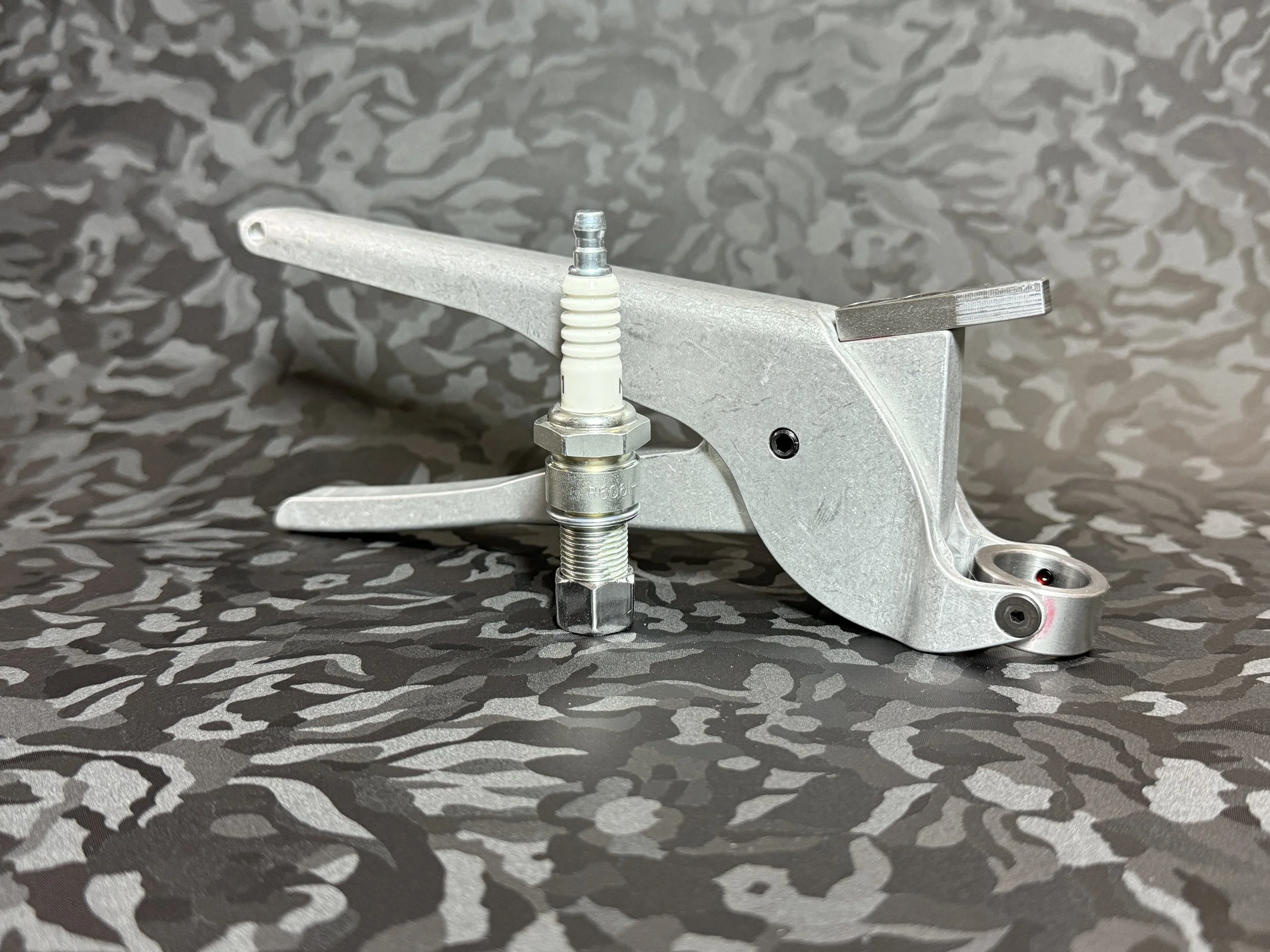
How to Gap Spark Plugs Correctly (And Why Most People Get It Wrong)
MOST PEOPLE DON’T THINK MUCH ABOUT SPARK PLUG GAPPING-UNTIL IT CAUSE A PROBLEM.
Misfires, inconsistent performance, or even damaged plugs often come down to something simple:
The gap isn’t set correctly.
And more often than not, it’s not the number that’s wrong—it’s how the adjustment was made.
Why Spark Plug Gap Matters
Spark plug gap directly affects how your engine performs.
If the gap is too small, the spark can be weak.
If the gap is too large, the spark may struggle to fire under load.
That leads to:
Inconsistent combustion
Reduced performance
Hard starting or misfires
In high-performance engines, even small inconsistencies can make a noticeable difference.
What Most People Get Wrong
Most people use basic tools or improvised methods to gap spark plugs.
That usually means:
Uneven pressure on the electrode
Bending at the wrong point
Guessing instead of making controlled adjustments
This leads to:
Cracked or weakened plugs
Inconsistent gaps across cylinders
Performance issues that are hard to diagnose
How to Gap Spark Plugs Correctly
A proper adjustment should be:
Controlled
Even
Repeatable
The goal isn’t just to hit a number—it’s to make sure every plug is adjusted the same way.
STEP BY STEP PROCESS
Place the spark plug into the holder on the pliers.
Select the correct thickness feeler gauge for your desired gap.
Insert the feeler gauge between the center electrode and the ground electrode
Apply pressure with the pliers, pinching the feeler gauge evenly between the electrodes
Release the pressure and remove the feeler gauge
Check the gap and repeat if needed
Move to the next plug and repeat the process
Why the Tool You Use Matters
This is where most problems start.
Basic gapping tools can:
Apply uneven pressure
Damage the plug
Make consistent adjustments difficult
That’s why many racers and engine builders switch to precision tools designed specifically for controlled adjustments.
The Difference a Precision Tool Makes
Instead of guessing or bending by hand, a proper tool allows you to:
Apply even, controlled pressure
Make fast adjustments
Get a consistent, repeatable gap every time
Where B&J Transmissions Spark Plug Pliers Fit In
At B&J Transmissions, we built our spark plug pliers for one reason:
To make spark plug gapping simple, consistent, and reliable.
No uneven pressure
No guessing
No damaged plugs
Just fast, repeatable adjustments—especially when time matters.
Common Mistakes to Avoid
Forcing the electrode too far
Applying pressure from the wrong angle
Not re-checking the gap
Assuming all plugs are the same
Fixing these small mistakes can make a big difference in both performance and reliability.
Frequently Asked Questions
What is the correct spark plug gap?
It depends on your engine and setup. Always follow manufacturer recommendations.
Can you damage a spark plug while gapping it?
Yes. Uneven pressure or improper tools can crack or weaken the electrode.
Do I need a special tool to gap spark plugs?
Basic tools can work, but precision tools make the process faster, safer, and more consistent.
Why does spark plug gap affect performance?
The gap determines how the spark forms. Incorrect gaps can lead to weak ignition or misfires.
Final Thought
Spark plug gapping seems simple—but doing it consistently makes all the difference.
Whether you’re working on a daily driver or a race car:
Precision matters.
Looking for a Better Way to Gap Plugs?
If you’re tired of guessing or damaging plugs, use a tool designed to do it right the first time.